
Funnel Analysis: Where SaaS Products Actually Lose Users
Most SaaS funnels are built on bad data. Learn where product analytics breaks down, how to spot false drop-offs, and build funnels you can actually trust.
Introduction
Every SaaS product team has stared at a funnel report and asked the same question: why are users dropping off at this step? The problem is that most funnel analysis built on standard product analytics setups is answering a different question than teams think it is. Between ad blockers eating client-side events, misconfigured event taxonomies inflating or deflating stage counts, and GA4 reports that silently sample data, the funnel you see in your dashboard is rarely the funnel your users actually experience. What separates high-performing product teams from the rest is not just tracking user behaviour analytics across the funnel, but knowing which drop-off signals are real abandonment and which are measurement artefacts that waste engineering cycles.

Why Most SaaS Funnels Are Built on Broken Data
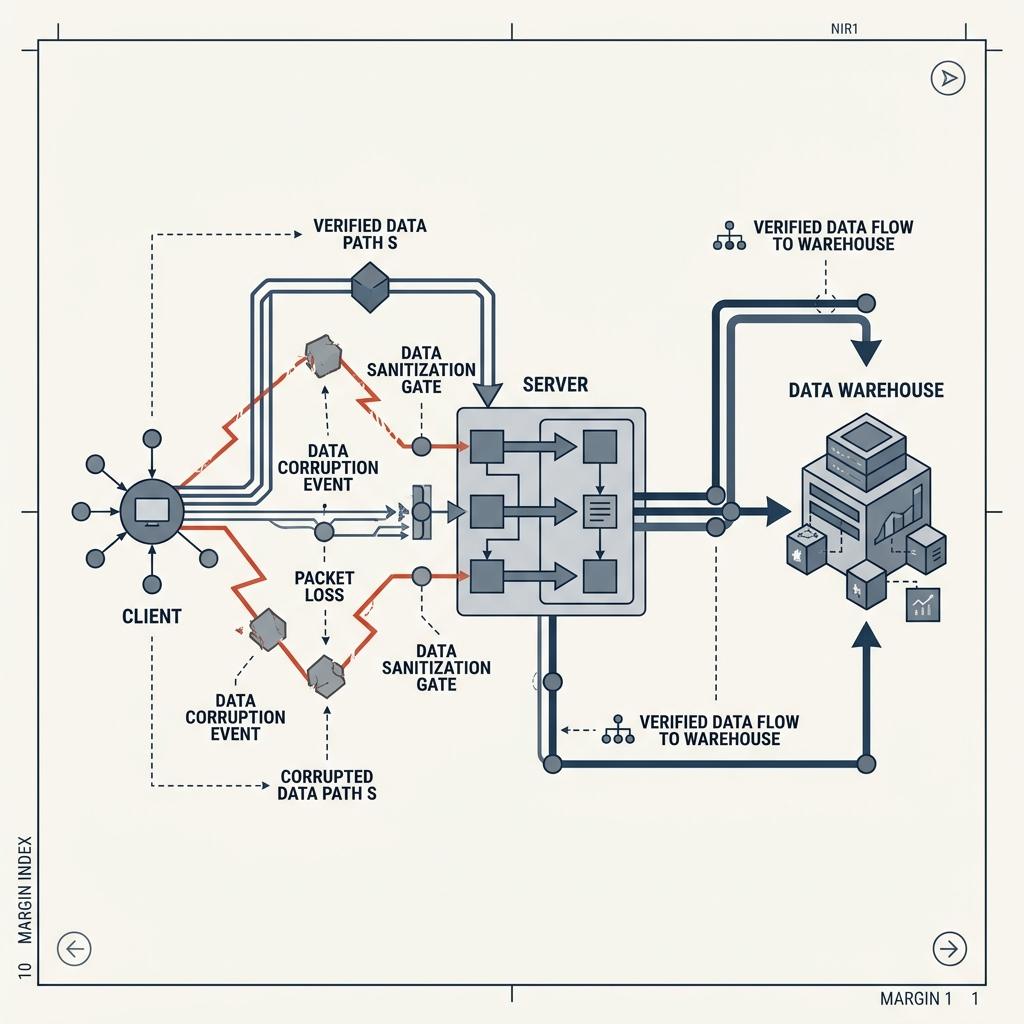
The core issue is not that teams lack funnel analysis tools. It is that the data feeding those tools is corrupted before it ever reaches a chart. When your instrumentation layer has gaps, every downstream metric, from conversion rates to cohort retention curves, inherits those gaps silently. Teams then optimize against phantom problems while the real revenue leaks go unnoticed.
The Client-Side Tracking Tax
Client-side event tracking was the default for a decade, and most SaaS products still rely on it as the primary data source for funnel construction. The problem is that ad blockers destroy a significant portion of this data before it reaches your analytics platform. Depending on your audience's technical sophistication, 20% to 40% of browser-side events simply never fire.
Ad blocker interference: Privacy-focused users (often your most valuable power users) run extensions that block tracking scripts entirely, creating survivorship bias in your funnel data.
Browser privacy changes: Safari's ITP and Firefox's Enhanced Tracking Protection silently truncate cookies and block third-party scripts, causing identity resolution failures mid-funnel.
Single-page app race conditions: In React or Next.js apps, virtual page transitions can fire events out of order or duplicate them, inflating certain funnel stages while deflating others.
Network failures and timeouts: Users on unstable connections lose events that never retry, making mobile funnel stages appear disproportionately leaky.
Event Taxonomy Rot and Silent Misattribution
Even when events fire correctly, the names and properties attached to them degrade over time. A "signup_complete" event that once meant "user verified email" might now also fire on social auth flows that skip verification entirely. Two funnel stages that appear identical in your dashboard represent fundamentally different user actions. This kind of event taxonomy drift at scale is the most common source of phantom drop-off: your funnel shows a cliff between steps 2 and 3, but the cliff is really a definition mismatch, not a user experience problem. Teams that skip taxonomy audits before building funnels are, in practice, making product decisions on corrupted measurement foundations.

Where Real User Drop-Off Happens (and How to Prove It)
Once you have confidence that your tracking infrastructure is capturing events accurately, the next step is knowing which funnel stages are genuinely vulnerable to user abandonment in SaaS products. The patterns are remarkably consistent across B2B and B2C SaaS, though the fixes differ by product type and activation model.
The Three Highest-Risk Funnel Stages
The first critical drop-off zone is between signup and first value delivery. Industry benchmarks for 2026 show that B2B SaaS products lose 40% to 60% of signups before users complete onboarding. This is not a tracking problem. It is a product problem, and the distinction matters. If your conversion tracking shows a 55% drop between "account_created" and "first_action_completed," and your server-side tracking confirms both events are firing accurately, you have a genuine activation gap to fix.
The second danger zone sits between activation and habitual usage. Users who complete onboarding but never return within 7 days have an extremely low probability of converting to paid. Cohort analysis is the only reliable way to distinguish between users who churned due to poor product-market fit and users who simply had a bad first session. Aggregate funnel charts flatten this distinction entirely, which is why product performance tracking at the cohort level matters far more than top-line conversion rates.
Separating Real Abandonment from Measurement Failure
The litmus test for whether a drop-off is real or an artefact comes down to one practice: validating funnel events against a server-side source of truth. If your client-side funnel shows 1,000 users reaching step 3 but your backend logs show 1,350 completing the same action, you do not have a product problem at step 3. You have a data accuracy failure that is masking what is actually happening.
The most reliable approach is to build your critical funnel events (signup, activation, conversion, expansion) as server-side events that fire from your application backend, not from the browser. Client-side events remain useful for UI interaction tracking, things like button clicks, scroll depth, and feature discovery. But the load-bearing events in your funnel should never depend on JavaScript executing in a user's browser. TrackRaptor has covered the architecture mistakes teams make when implementing server-side tracking, and the most common error is treating it as a simple swap rather than a rearchitecture of the event pipeline.
Building a Funnel You Can Actually Trust
Trustworthy funnel analysis requires three layers working together: clean event instrumentation, a hybrid tracking architecture, and cohort-aware reporting that surfaces behavioural signals rather than vanity totals.
The Technical Foundation
Start with a governed event taxonomy. Every funnel-critical event needs a written contract: what triggers it, what properties it carries, and what it does not represent. This is not bureaucratic overhead. It is the difference between a funnel that guides decisions and one that generates noise. Tools like Mixpanel and Amplitude both support event validation schemas, but the schema itself must be maintained in version control alongside your application code, not in a spreadsheet that three people forgot exists.
Next, implement a hybrid tracking model. Use server-side events for the conversion-critical path (signup, activation, payment, churn) and client-side events for behavioural discovery (feature clicks, page views, UI interactions). This gives you a reliable structural funnel from the server side and rich behavioural signals from the client side. When comparing Mixpanel vs Amplitude for this kind of setup, the meaningful difference is less about feature parity and more about how each platform handles customer journey mapping across server and client event sources. TrackRaptor publishes detailed comparisons of the best analytics platforms in North America for exactly this use case.
Cohort-Aware Reporting Over Aggregate Funnels
Aggregate funnels tell you "30% of users drop off at step 4." Cohort-aware funnels tell you "users who signed up via organic search in Q1 drop off at step 4 at twice the rate of paid acquisition cohorts." The second version is actionable. The first is a number you stare at in a meeting. Product metrics tracking without cohort segmentation is effectively a summary statistic that hides every insight that would actually change your roadmap.
The practical move is to define your funnel once, then slice it by acquisition channel, signup week, plan tier, and geography. Most SaaS analytics tools support this natively, but teams rarely configure it because aggregate reports ship faster. The investment in auditing your tracking accuracy and building cohort views pays back within a single product cycle when it prevents your team from spending two sprints fixing a "drop-off problem" that was actually a tracking gap in one browser segment.
Conclusion
Funnel analysis in SaaS is only as reliable as the event data feeding it, and most teams are making product decisions on funnels that silently misrepresent reality. The fix is not a better dashboard or a more expensive analytics tool. It is a disciplined approach to event instrumentation, a hybrid tracking architecture that puts conversion-critical events on the server side, and cohort-level reporting that surfaces real behavioural patterns. Teams that treat funnel integrity as an engineering discipline rather than a reporting task will consistently outship competitors who optimize against phantom drop-offs.
Explore TrackRaptor's deep-dive guides on tracking architecture, event governance, and SaaS analytics to build funnels your team can actually trust.
Frequently Asked Questions (FAQs)
What is product analytics?
Product analytics is the practice of collecting, measuring, and analyzing user interaction data within a digital product to understand behaviour patterns and inform product decisions.
How to measure product performance?
Measure product performance by tracking activation rates, retention cohorts, feature adoption, and conversion rates using server-validated event data rather than relying solely on aggregate page-view metrics.
What is event tracking?
Event tracking is the process of capturing specific user actions (such as clicks, signups, or purchases) as structured data points that can be analysed to understand how users interact with a product.
Can I use Google Analytics for product analytics?
Google Analytics can capture basic product events, but its data sampling, limited identity resolution, and client-side-only collection make it insufficient as a primary product analytics tool for SaaS teams that need accurate funnel and retention data.
What are the top-rated product analytics alternatives to Mixpanel?
Top-rated alternatives to Mixpanel include Amplitude, PostHog, Heap, and Pendo, each offering different strengths in areas like warehouse-native architecture, open-source flexibility, auto-capture, and in-app guidance integration.