
Product Analytics Tools Every SaaS Team Needs in 2026
Discover the best product analytics tools for SaaS teams in 2026. Compare platforms by use case, event tracking depth, and team fit. Make a smarter stack decision.
Introduction
The product analytics tools market has ballooned into a crowded, confusing landscape where every vendor claims to deliver "actionable insights" and "360-degree user understanding." For SaaS teams trying to ship features and reduce churn, the real challenge is not finding a tool; it is finding the right one for a specific team size, data maturity, and growth stage. Most comparison articles rehash feature matrices without addressing the operational reality of implementing these platforms. This guide takes a different approach: evaluating the best product analytics tools through the lens of use-case fit, so product managers, data engineers, and growth operators walk away knowing exactly which platform belongs in their stack and which ones will waste their quarter.

Choosing a Product Analytics Platform by Team Context
The biggest mistake SaaS teams make when selecting analytics software is starting with a feature checklist instead of starting with how their team actually works. A five-person startup running lean experiments needs a fundamentally different tool than a 200-person org with a dedicated data engineering team managing a warehouse-native stack. Context drives the decision, not checkbox comparisons. NIST highlights how data strategy should align with operational requirements.
What Matters Most at Each Growth Stage
The criteria shift dramatically depending on where a SaaS company sits in its trajectory. Early-stage teams need speed and simplicity. Growth-stage teams need depth and event taxonomy governance at scale. Enterprise teams need compliance, permissioning, and warehouse integrations. Here is what actually moves the needle at each stage:
Seed to Series A: Prioritize fast event tracking setup, out-of-the-box funnel analysis, and low engineering overhead so the product manager can self-serve without blocking developers.
Series B to C: Look for robust cohort analysis tools, identity resolution, and clean integrations with your data warehouse so insights connect to revenue, not just clicks.
Late-stage and Enterprise: Focus on data governance, role-based access, GDPR and SOC 2 compliance, and the ability to run analytics on top of Snowflake or BigQuery natively.
PLG-focused teams: Demand real-time behavioral signals that predict churn, activation tracking, and the ability to trigger in-app experiences based on usage patterns.
The Integration Question Nobody Asks Early Enough
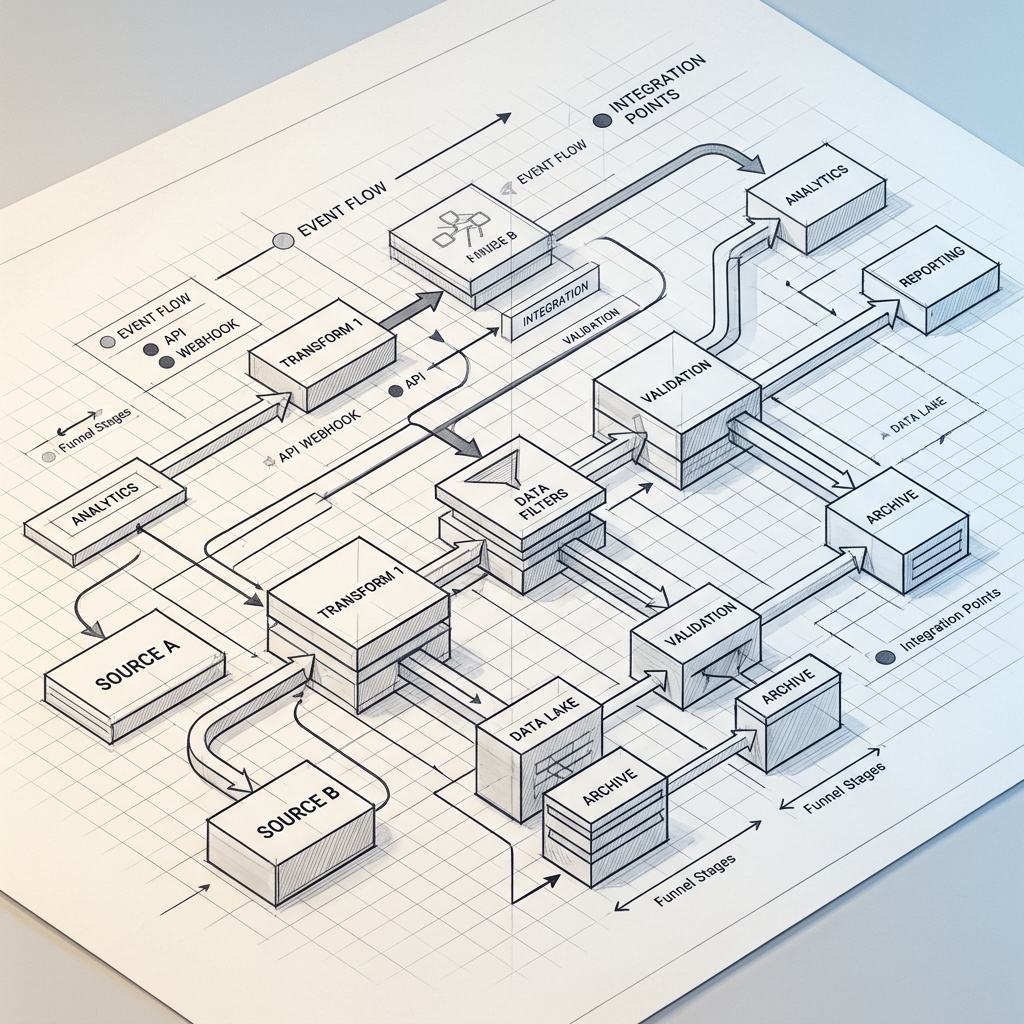
Most product analytics platforms look impressive in a demo. The problems surface three months into implementation when the engineering team discovers the SDK conflicts with an existing tracking layer, or that the tool cannot ingest events from a server-side pipeline without custom middleware. Before evaluating any platform, map your current data flow: where events originate, how they reach your warehouse, and which downstream tools consume them. A product analytics platform that cannot slot into that pipeline without major rearchitecture is not a fit, regardless of how polished its dashboards look. Integration limitations often create long-term operational bottlenecks for engineering teams.
Teams using Segment or a similar CDP have more flexibility, but even then, not every analytics tool handles Segment's event schema identically. Some truncate properties, others impose their own naming conventions that clash with a carefully maintained event taxonomy. These details matter more than any headline feature comparison.

The Major Platforms and Where They Actually Fit
Rather than ranking tools on a generic leaderboard, this section breaks down where each major product analytics platform genuinely excels and where it falls short. The goal is honest positioning, not vendor diplomacy.
Mixpanel, Amplitude, and PostHog: Honest Positioning
Mixpanel remains one of the strongest options for product managers who want to run funnel analysis and user engagement analytics without writing SQL. Its interface is intuitive, its query speed is fast, and its recent warehouse connector improvements make it more viable for teams that want Mixpanel's UI on top of their own data. The downside: pricing scales aggressively with event volume, and teams exceeding 50 million monthly events start feeling the squeeze. For a detailed breakdown, TrackRaptor's Mixpanel vs Amplitude vs PostHog comparison covers the nuances in depth.
Amplitude positions itself as the analytics platform for product-led growth, and its investment in cohort analysis and retention features reflects that. The collaboration features are strong for larger teams, and its Amplitude CDP play makes it appealing for orgs that want fewer vendors. However, Amplitude's learning curve is steeper than Mixpanel's, and smaller teams often find they are paying for sophistication they do not yet need. The free tier is generous, but the jump to paid plans is steep.
PostHog has carved out a distinct position as the open-source alternative to Amplitude that ships with session replay, feature flags, and A/B testing baked in. For engineering-led SaaS teams, especially those already comfortable self-hosting and managing infrastructure, PostHog offers remarkable value. The tradeoff is that its analytics depth on funnels and retention still lags behind Mixpanel and Amplitude for non-technical users. Product managers who prefer point-and-click workflows may find PostHog's interface less polished.
Emerging Alternatives Worth Watching
Beyond the big three, several platforms are gaining traction in specific niches. Heap continues to push autocapture as a differentiator, though the data quality concerns around autocaptured events remain real for teams that care about event taxonomy best practices. June. So targets early-stage B2B SaaS with a lightweight, opinionated product that does fewer things but does them cleanly. For teams already running everything through a modern data stack, tools like Metabase layered on top of a warehouse can serve as a surprisingly effective product metrics solution without a dedicated analytics vendor at all.
The warehouse-native analytics movement deserves attention. Platforms that query directly against Snowflake or BigQuery, rather than requiring a separate data copy, eliminate an entire category of data sync issues. For data engineering teams that have invested heavily in dbt models and clean warehouse schemas, this approach avoids the "two sources of truth" problem that plagues organizations running a standalone analytics platform alongside their warehouse. TrackRaptor has covered this trend extensively, and the direction is clear: the warehouse is becoming the analytics layer for mature SaaS teams.
Conclusion
The right product analytics platform is not the one with the longest feature list. It is the one that fits the way your team actually builds, measures, and iterates. Early-stage teams should optimize for speed and simplicity, growth-stage teams for depth and governance, and enterprise teams for warehouse integration and compliance. Stop evaluating tools in isolation; instead, map them against your data infrastructure, team skill set, and the specific questions you need answered to reduce churn and drive product-led growth.
Explore TrackRaptor's deep-dive guides and comparison articles to find the analytics stack that fits your SaaS team's real-world needs.
Frequently Asked Questions (FAQs)
What are the best product analytics tools for SaaS teams?
Mixpanel, Amplitude, and PostHog are the most widely adopted options, with the best fit depending on team size, technical maturity, and whether you prioritize self-serve dashboards or warehouse-native querying.
How do product analytics tools track user behavior?
They capture user actions as structured events, either through client-side SDKs, server-side API calls, or autocapture, then aggregate those events into funnels, cohorts, and retention curves for analysis.
What metrics should product managers track in 2026?
Activation rate, feature adoption frequency, time-to-value, expansion revenue per cohort, and churn predictors based on usage decay are the metrics that separate signal from noise for product managers this year.
How to implement event tracking analytics in a SaaS product?
Start by defining a clean event taxonomy with consistent naming conventions, instrument critical user actions through your SDK or server-side pipeline, validate data quality in staging, and only then connect your analytics platform for reporting.
What is the difference between behavioral analytics and product analytics?
Behavioral analytics is a broader category encompassing any analysis of user actions across channels, while product analytics specifically focuses on in-product interactions like feature usage, navigation paths, and engagement patterns within a software application.