CI/CD Tracking Automation: Ship Events Without Breaking Prod
CI/CD tracking automation stops broken events before they hit prod. Learn how to embed schema validation and audits into your deploy pipeline.
CI/CD Tracking Automation: Ship Events Without Breaking Prod
Introduction
Most tracking failures do not announce themselves. A property gets renamed in a refactor, a new feature ships without instrumentation, or a schema change silently invalidates six weeks of funnel data — and nobody notices until the quarterly review lands wrong. CI/CD tracking automation is the answer to this recurring problem: embedding validation, schema enforcement, and event auditing directly into the deployment pipeline so that tracking regressions get caught before they ever reach production. For SaaS engineering and data teams, this is not a nice-to-have. It is the difference between analytics you can trust and analytics you are always second-guessing.

Why Tracking Breaks in Fast-Moving Pipelines
Speed is the enemy of instrumentation hygiene. When engineering teams operate under sprint pressure, tracking implementation is treated as a secondary concern — something to wire up after the feature is already merged. That sequencing is where most of the damage happens.
The Root Causes of Silent Tracking Drift
Tracking drift is rarely dramatic. It accumulates through small, low-visibility changes that individually look harmless. Understanding the failure modes is the prerequisite to automating against them. The most common culprits are:
- Property renaming: A developer renames a component prop and the corresponding event property disappears from the payload without any schema warning.
- Untracked feature launches: A new flow ships without instrumentation because tracking was never part of the definition of done.
- Client-side drift: server-side tracking is more resilient, but client-side implementations break silently when DOM changes or browser APIs shift under them.
- Schema version mismatches: An event schema is updated in the tracking plan but the implementation still fires the old shape, causing downstream data pipeline automation jobs to fail or silently drop fields.
- Missing required properties: Optional fields get accidentally promoted to required in a schema update, and older event calls start firing invalid payloads.
Why Manual QA Cannot Keep Up
Manual tracking QA does not scale. A mid-size SaaS product might ship 10 to 15 pull requests a day across multiple squads. Expecting a data engineer or analyst to review every merge for automated tracking implementation coverage is operationally unrealistic. The window between a breaking change and its detection in production is typically one to three weeks — long enough for meaningful data loss to occur. Any team serious about tracking infrastructure automation needs validation baked into the pipeline, not bolted on after the fact.

Building the CI/CD Tracking Automation Stack
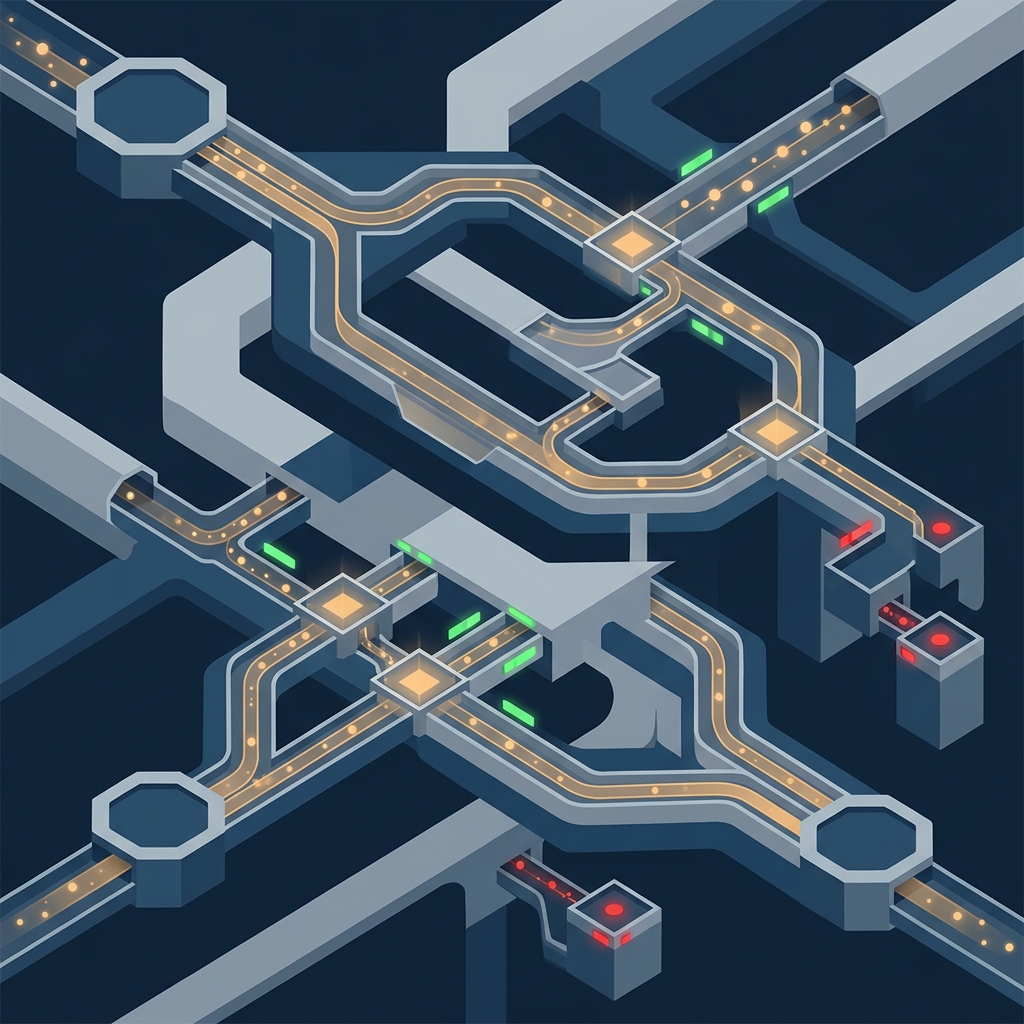
The goal is a pipeline where a tracking regression cannot merge to production without triggering a visible, blocking signal. That requires four discrete layers working together: schema validation gates, event diff tooling, automated audit triggers, and rollback logic.
Schema Validation Gates and Event Diff Tooling
The first layer is a schema validation gate that runs as part of every CI build. Your event schema — the structured definition of each event's name, properties, types, and required fields — should live in version control alongside your application code. Tools like schema validation frameworks or a purpose-built schema registry enforce that every event call in a pull request matches its defined contract before the build passes. If a property is missing, mistyped, or unexpectedly absent, the gate fails and the engineer gets an explicit error. No ambiguity, no silent pass-through.
Event diff tooling sits alongside the validation gate and handles a different problem: detecting what changed between deploys. A diff tool compares the event taxonomy snapshot from the previous release against the current build and surfaces additions, removals, and mutations at the property level. This is especially valuable for catching event taxonomy regressions that technically pass schema validation because the schema itself was updated, but represent a behavioral change that downstream consumers have not been notified about.
Automated Audit Triggers and Rollback Logic
Once schema gates and diffing are in place, the next layer is automated audit triggers that fire on specific pipeline events. A deploy to staging should automatically kick off a tracking audit: fire a synthetic test suite of expected events against the staging environment, validate the payloads against the schema registry, and produce a coverage report before promotion to production is allowed. Teams using CI/CD pipelines with promotion gates can block a staging-to-production promotion if the audit reports coverage below a defined threshold, say 95% of expected events firing correctly.
Rollback logic is the final safety net. If a production deploy causes a spike in event validation errors detected by SaaS tracking monitoring, an automated rollback should be possible without requiring a human to investigate first. This requires setting error rate thresholds on your event stream and wiring them to your deployment system. The practical implementation varies by stack, but the principle is consistent: tracking health should be a first-class deployment signal, not an afterthought in the post-mortem.
Conclusion
Tracking automation is not a tool you buy and deploy once. It is an operational practice that requires commitment from engineering, data, and product leadership simultaneously. The teams that get it right treat their tracking infrastructure with the same rigor they apply to application code: versioned schemas, tested implementations, and monitored deployments. Start with schema validation gates in your existing CI pipeline, layer in event diff tooling on pull requests, and build toward automated audit triggers on every staging promotion. TrackRaptor covers this space in depth across its tracking implementation articles if you need reference material for specific stack configurations. The goal is a state where your analytics degrade loudly and visibly, not quietly and invisibly.
Ready to stop debugging tracking after the fact? Explore TrackRaptor's full library of CI/CD and tracking automation resources.
Frequently Asked Questions (FAQs)
What is CI/CD tracking automation?
CI/CD tracking automation is the practice of embedding event schema validation, coverage auditing, and regression detection directly into your continuous integration and deployment pipeline so that tracking errors are caught before they reach production.
How to automate event tracking in a SaaS deployment pipeline?
To automate event tracking, version-control your event schemas, add a schema validation gate to your CI build, use event diff tooling on pull requests, and trigger automated tracking audits on every staging deployment before promoting to production.
Why automate your tracking infrastructure?
Manual tracking QA cannot scale with the pace of modern SaaS development, and without automation, tracking regressions typically go undetected for one to three weeks, causing significant data loss that corrupts funnel analysis, attribution models, and growth metrics.
Can automation improve tracking accuracy?
Yes, automation improves tracking accuracy by enforcing schema contracts at the build level, flagging missing or malformed event properties before they reach your data warehouse, and enabling rollback when production error rates on the event stream exceed defined thresholds.
What are the benefits of tracking automation for SaaS teams?
The primary benefits include proactive regression detection, consistent event taxonomy enforcement across engineering squads, faster root-cause analysis when tracking does break, and a measurable improvement in downstream data quality for product analytics and growth reporting.